
Investing in the share market is no longer just for the wealthy or financial experts, it’s becoming a common step toward financial growth for everyday Nepalese. According to the myrepublica as of mid-March 2024, over 6.224 million people in Nepal held DEMAT accounts, representing nearly 21% of the total population. This rapid increase shows a growing interest and participation in the Nepal stock market.
What is NEPSE and How it Works
NEPSE, also known as Nepal Stock Exchange, is the only stock exchange in Nepal which was founded in 1994. It facilitates the trading of stocks, mutual funds, and other securities of listed companies. So, how it works:
1. Stock Brokers
Brokers are licensed middlemen who help you buy and sell shares on NEPSE. You must open an account with a broker to start trading. They use an online system called TMS and charge a small fee per transaction.
2. CDS & Clearing Ltd (CDSC)
CDSC is where your shares are stored electronically. After you buy shares, they are deposited into your DEMAT account. CDSC also handles the clearing and settlement between buyers and sellers.
3. NEPSE
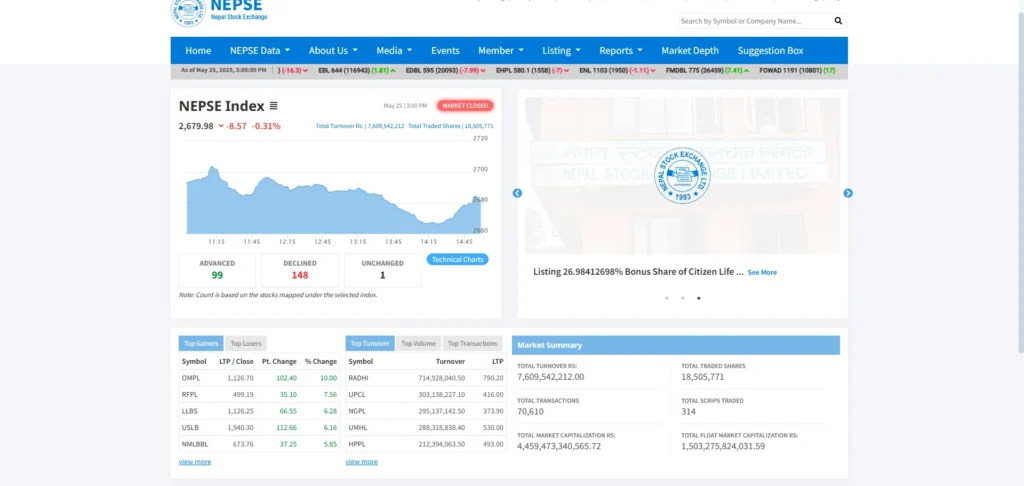
NEPSE is the official stock market of Nepal. It lists companies and shows live trading data like prices and volume. All share trading happens through NEPSE.
4. SEBON
SEBON is the regulator. It makes rules, approves IPOs, and ensures the market is fair and safe for investors.
How to Buy Share in Nepal?
Step 1: Open a DEMAT and MeroShare Account
The first step for a beginner is to open a DEMAT account. You can open it through:
- Banks (e.g., Nabil, NIC Asia, NMB)
- Licensed brokers
- Merchant banks
Requirement to open a Demat account
- Recent passport-size photographs
- Nepali citizenship
- Birth certificates and guardian’s citizenship ( for minors only)
- Details of your bank account
Once your documents are verified, your Demat account will be opened, and you’ll be issued a 16 digit BOID (Beneficial Owner Identification Number)
MeroShare, CRN Number & How They Work
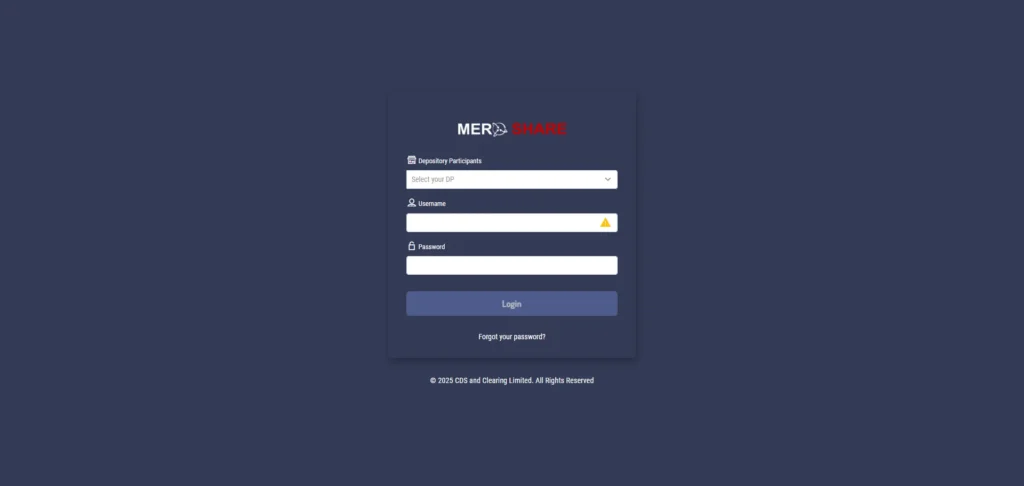
After opening your DEMAT account, the next step is to register for MeroShare. This platform lets you apply for IPOs online and track your investments. To apply for IPOs using MeroShare, you must have a CRN number, short for C-ASBA Registration Number.
How to get your CRN number:
- Visit the same bank or Depository Participant (DP) where you opened your DEMAT account.
- Fill out the C-ASBA registration form (CRN form).
- Submit a copy of your citizenship and your BOID.
- Once processed, your DP will provide you with your CRN number, which links your bank account with MeroShare for applying to IPOs.
⚠️ Without a valid CRN number, your IPO application will be rejected.
The yearly fee for Mero Share typically ranges from NPR 50 to NPR 100.
After submitting your application, the DP will process it in a few days. Once done, you’ll get your Mero Share login details (username and password) by email or in hard copy.
To log in to Mero Share:
- Go to meroshare.cdsc.com.np
- Enter your login details
- Change your password on first login
You can now apply for IPOs, check your portfolio, and track investments.
Step 2: Choose a Broker
After opening the DEMAT account and logging in to Mero Share, select the popular and trusted stock brokers in Nepal. Here are some of the popular stock brokers of Nepal.
- Naasa Securities (Broker No. 58)
- Vision Securities (Broker No. 34)
- Sri Hari Securities (Broker No. 56)
- Imperial Securities (Broker No. 54)
- Sani Securities (Broker No. 42)
- Dakshinkali Investment Securities (Broker No. 33)
Before choosing the stockbroker consider these things
✅ Low commission fees (ranges from 0.4% to 0.6%)
✅ User-friendly TMS platform
✅ Quick customer support
✅ Easy online account setup
✅ Mobile app availability
✅ Good reputation and active customer base
Step 3: Understand TMS (Trading Management System)
TMS (Trading Management System) is the online platform you use to buy and sell shares in Nepal.
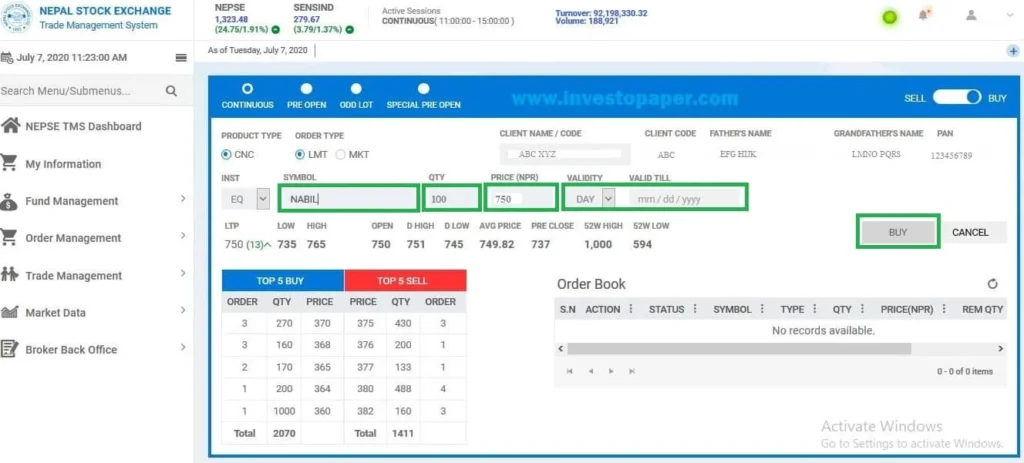
Your broker provides it after you open a trading account.
So, how to log in and trade
Step 1: Open an broker account
Step 2: Get your TMS login ID and password from your broker.
Step 3: Go to your broker’s TMS link.
Step 4: Log in and explore the dashboard.
To Buy Shares:
- Click on “Buy”
- Enter Stock Symbol (e.g., NABIL)
- Enter Quantity and Price
- Submit the order
To Sell Shares:
- Click on “Sell”
- Select the stock from your portfolio
- Enter quantity and price
- Submit the order
Step 4: Start with Your First Investment
Start as low as you can, If you’re unsure where to start, begin with basic financial terms like PE ratio, paid-up capital, dividend history, and support/resistance.
Start with Rs. 5,000 to Rs. 10,000
It’s enough to learn without risking much.
🔹 Tips for Beginners
- Learn first – Watch videos, read books, or follow trusted finance pages
- Start with IPOs – If you don’t have enough knowledge, IPOs are safer and beginner-friendly
- Stay patient – Stock investing is not a get-rich-quick scheme
- Follow NEPSE news – Stay updated with market trends
- Avoid herd mentality – Don’t invest just because everyone else is, and always learn the basics to avoid mistake in investment early on.
Investment Options in Nepal
1. Ordinary Shares
Ordinary shares (or common stocks) allow you to become a part-owner of a company. As a shareholder, you get voting rights and potential dividends. However, the market is unpredictable, so it’s essential to learn the basics before jumping in.
Tip: “Invest in best companies if you don’t want to lose your money. Start slow and choose trusted names.”
2. Mutual Funds
If you prefer a less risky approach, mutual funds might be right for you. These funds are managed by professionals who invest in a diversified portfolio on your behalf.
Tip: “If you have regular income, consider investing 10-20% monthly through SIPs in mutual funds.
3. IPOs & FPOs
Initial Public Offerings (IPOs) and Further Public Offerings (FPOs) are among the most popular entry points for new investors in Nepal.
📝 Getting Started:
- Open a Demat account and a MeroShare account through your bank.
- Apply for IPOs when they open. Although oversubscription is common, it’s a great place to begin with minimal risk.
Best Practices for New Investors in Nepal
Here are a few smart practices that can help you avoid common pitfalls and grow your investment with confidence.
| ✅ Do’s | ❌ Don’ts |
| Start small – Invest what you can afford to lose. | Don’t follow hype blindly on TikTok, Facebook, or YouTube. |
| Learn the basics – Understand NEPSE, MeroShare, and TMS. | Don’t invest your emergency savings or take loans to buy stocks. |
| Research companies before investing – Check history, dividends, etc. | Don’t panic-sell during market dips; volatility is normal. |
| Use tools like NEPSE Alpha to analyze charts and trends. | Don’t chase daily profits without understanding the risks. |
| Invest regularly – Use SIPs or stick to a monthly investment plan. |
One of the golden rules in investing is: “Don’t put all your eggs in one basket.”
- Spread your money across different sectors – e.g., banking, hydropower, mutual funds.
- Mix low-risk options (mutual funds) with moderate- to high-risk shares.
- Consider a combination of IPOs, blue-chip companies, and growth stocks.
FAQ
Can foreigners invest in Nepal stock market?
Foreign investors can’t invest in the Nepal Stock Exchange or buy shares of listed Nepali companies. Only Nepali citizens and Non-Resident Nepalis (NRNs) are allowed to invest and trade in NEPSE.
Is investing in IPO better than secondary market?
It depends on your goals and market conditions. Investing in well-known companies with a good history is easier in the secondary market and is usually less risky than investing in IPOs.
What happens if I don’t renew my DEMAT account?
If you don’t renew your DEMAT account, it becomes inactive. You can’t trade, and you may miss dividends or bonus shares. You might also have to pay a fee to reactivate it.